Lounsberry Amp Rescue

Schroeder Chopper TL, Ibanez S-Series, Fender Landau ML212, Bad Cat Cub 15


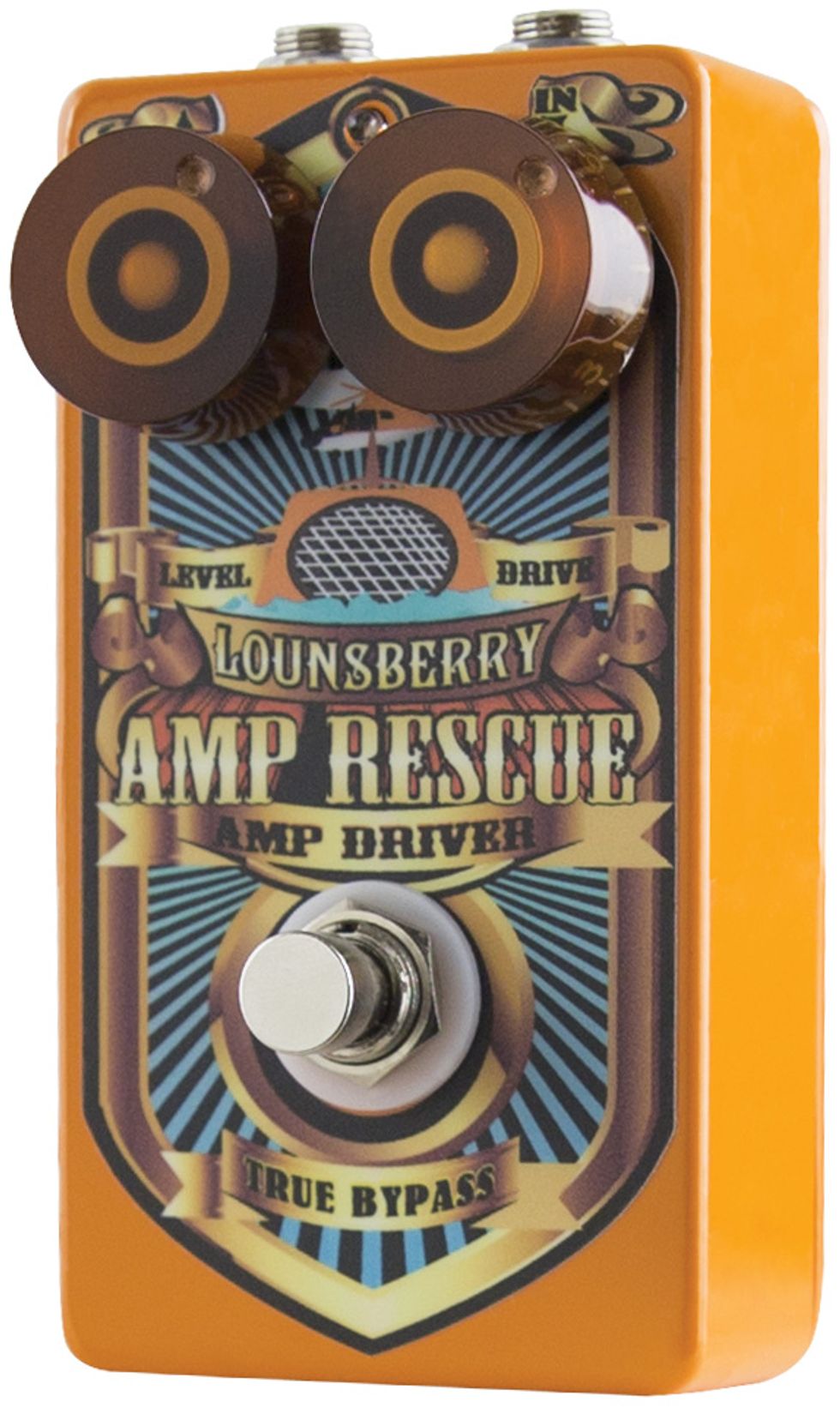
Billed as a solution for a less-than-adequate backline, the Amp Rescue is an amalgamation of overdrive, treble booster, and cleverly designed gain staging. The layout is a simple two-knob affair, with controls for level and drive. Under the hood is a multi-stage gain setup that features germanium diode clipping. In short, this means that even though there are only two knobs, the number of tonal colors is considerably more than the sum of this device’s parts.

With both knobs at noon, I was surprised at how present the top-end sizzle was. Through a rather clean setup on a Bad Cat Cub 15, the Amp Rescue pushed closer to Vox- or Supro-style bite quite easily. Given the gain staging in the circuit, the level control felt more interactive and added some real punch—even at moderate volume levels. With an amp set near break-up, the Amp Rescue really shined by adding some wonderfully rich harmonics and a fair amount of low end even with single-coils. Call me cynical, but would the Amp Rescue save your bacon if you showed up to a gig to find a Gorilla GG-20? Probably not, but you’d likely be better off with it than without.

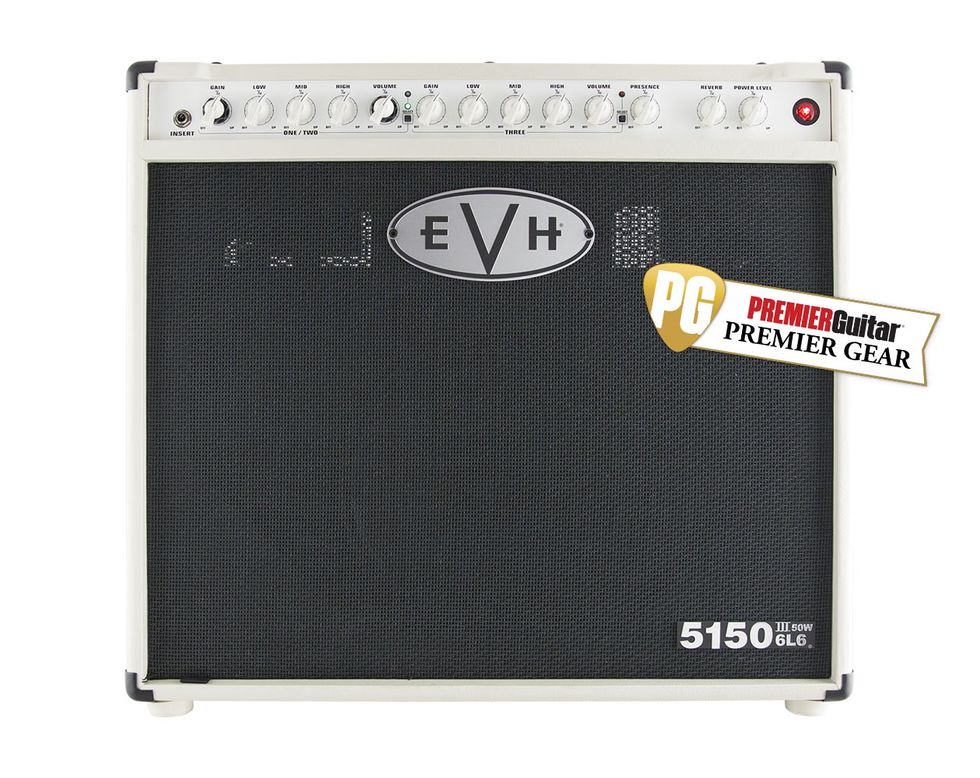
EVH 5150III 1×12 50W 6L6 Combo Review

The latest incarnation of the EVH 5150III adds a significant upgrade: namely, independent volume and gain controls for the clean and crunch channels. On past models, shared gain and volume controls for the clean and crunch channels made it tricky to make the clean channel clean enough and still have enough grit for the crunch channel. This revision solves that issue—and significantly expands the amp’s potential.

Heavy Duty Roller
When I pulled the amp out of the box, the first thing I noticed is that this combo is heavy—lifting and carrying it by the center handle isn’t exactly easy on the wrist. Thankfully, the folks at EVH are aware of the amp’s heft, and included casters that can be attached to the amp.

The all-tube, 3-channel amp (clean, crunch, and lead) features seven ECC83S preamp and two 6L6GC power-amp tubes. A Celestion 1X12 speaker lurks inside the 7-layer, birch-ply, closed-back cabinet. The front panel sports mini push buttons to select between channels. There are two sets of controls for gain, low, mid, high, and volume. But channel one and two (clean and crunch, respectively) share the leftmost set via a smart concentric knob design that gives you independent control of each channel. There are shared controls for master, presence, reverb, and power level (the amp can generate 1 to 50 watts).

Usually, “crunch” channels connote rhythm playing. But this crunch channel was equally crushing for leads—particularly with humbuckers.

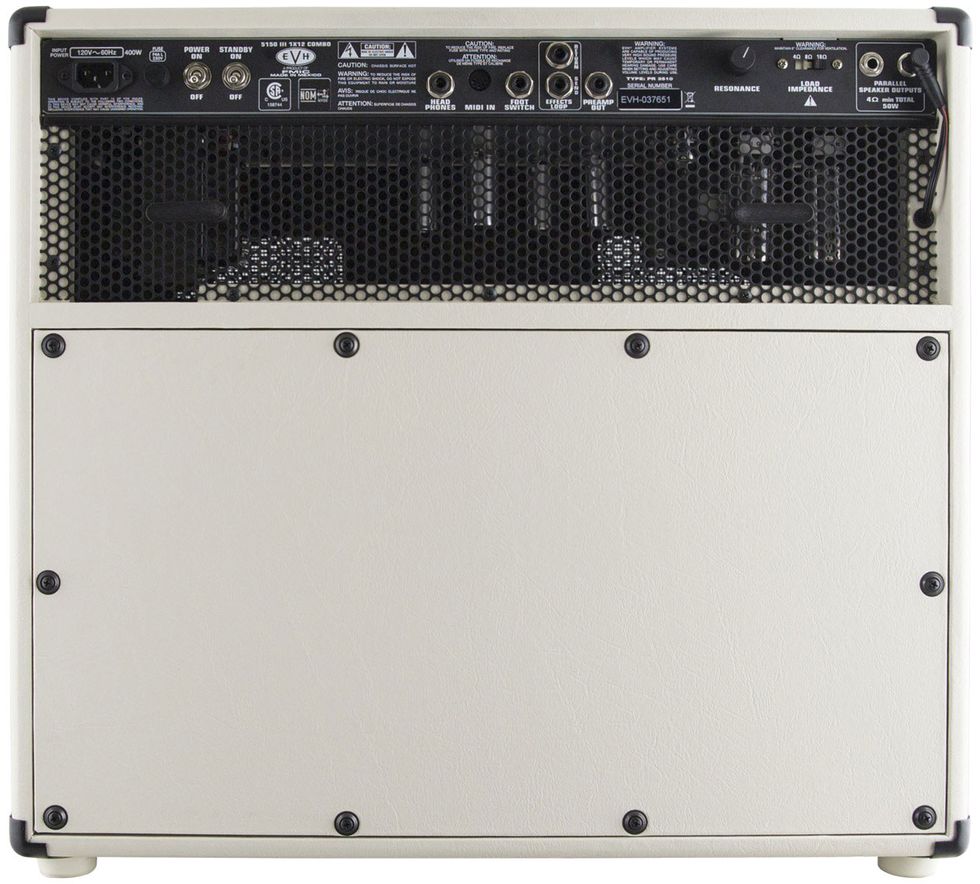
The rear panel has jacks for headphones, MIDI in, effects loop send and return, preamp out, and two speaker outputs, as well as a master resonance knob. There’s also a load impedance switch to allow you to select from 4, 8, or 16 ohms.

Better Than Blackface?
I started my own test using the clean channel, with gain at 10 o’clock and all EQ knobs at noon. While the clean wasn’t exactly pristine, the tones were super robust, thick, and singing. Fender, who set the standard for clean tones with amps like the Twin Reverb, are partners with EVH, and the EVH III’s clean tones are as detailed as those from many Fender amps that specialize in clean voices. In some settings, I preferred the clean colors from the EVH. And the appeal of these sounds has the potential to resonate among a lot of players apart from die-hard Van Halen fans.

The EVH’s beautiful DSP reverb, by the way, is spacious and angelic, with a long decay. It’s a nice match for the clean channel and certainly adds to the vibrancy of those tones. It is among the best onboard digital reverbs I’ve heard in an amp.

On Fire
Over on the crunch channel, you’ll hear a fair amount of grit even at the lowest gain levels. With all EQ knobs at noon, “Ain’t Talkin’ ’Bout Love”-type, arpeggiated figures sounded perfectly aggressive and detailed. With the gain up at noon, the amp really started to roar—producing classic, brawny “Panama”-style rhythm tones.

Usually, “crunch” channels connote rhythm playing. But this crunch channel was equally crushing for leads—particularly with humbuckers. Imagine that archetypical hot-rodded Marshall from the ’80s, and that’s what you more or less get here. Even in this 1×12 configuration, the amp sounds and feels massive.

The crunch channel is also versatile. It cleans up nicely with volume attenuation and is perfect for playing typical Eddie-style rhythm moves where dynamics play an integral role (the double-stop boogie figure throughout “Hot for Teacher” is a good example). Single-coils, meanwhile, generate delicious stinging tones that could work wonders in a contemporary blues context—something you might not expect from an EVH amp.

The lead channel has a modern, open feel, but the amount of available gain is especially impressive. With the gain and all EQ knobs around noon, the amp generates incredible sustain. But even if you bump the gain to near-maximum levels, pick attack remains clear and present. Crisp, staccato figures ring with precision and dead-on accuracy. Reducing the high-end content gave me a more liquid sound and softer pick attack that facilitates legato moves.

By the way, the 4-button footswitch (three channels and reverb) that makes dynamic shifts between the three channels possible operated flawlessly. Switching was immediate without any pops or latency.

The Verdict
In addition to his virtuosity and fiery showmanship, Eddie Van Halen is known as an obsessive tone chaser. In the old days, his quest for perfect sounds would lead him to carve out his Strat to fit in a humbucker (a practice that spawned the super-strat era), dip his pickups in paraffin wax to tame feedback squeals, and use a variac to manipulate the voltage going to his amps.

The 5150III is the beastly embodiment of Eddie’s ever-evolving tone quest. It’s inspiring to play. And all three core sounds—clean, crunch, and lead—are superb and useful well beyond Van Halen sound templates.

TC Electronic AEON


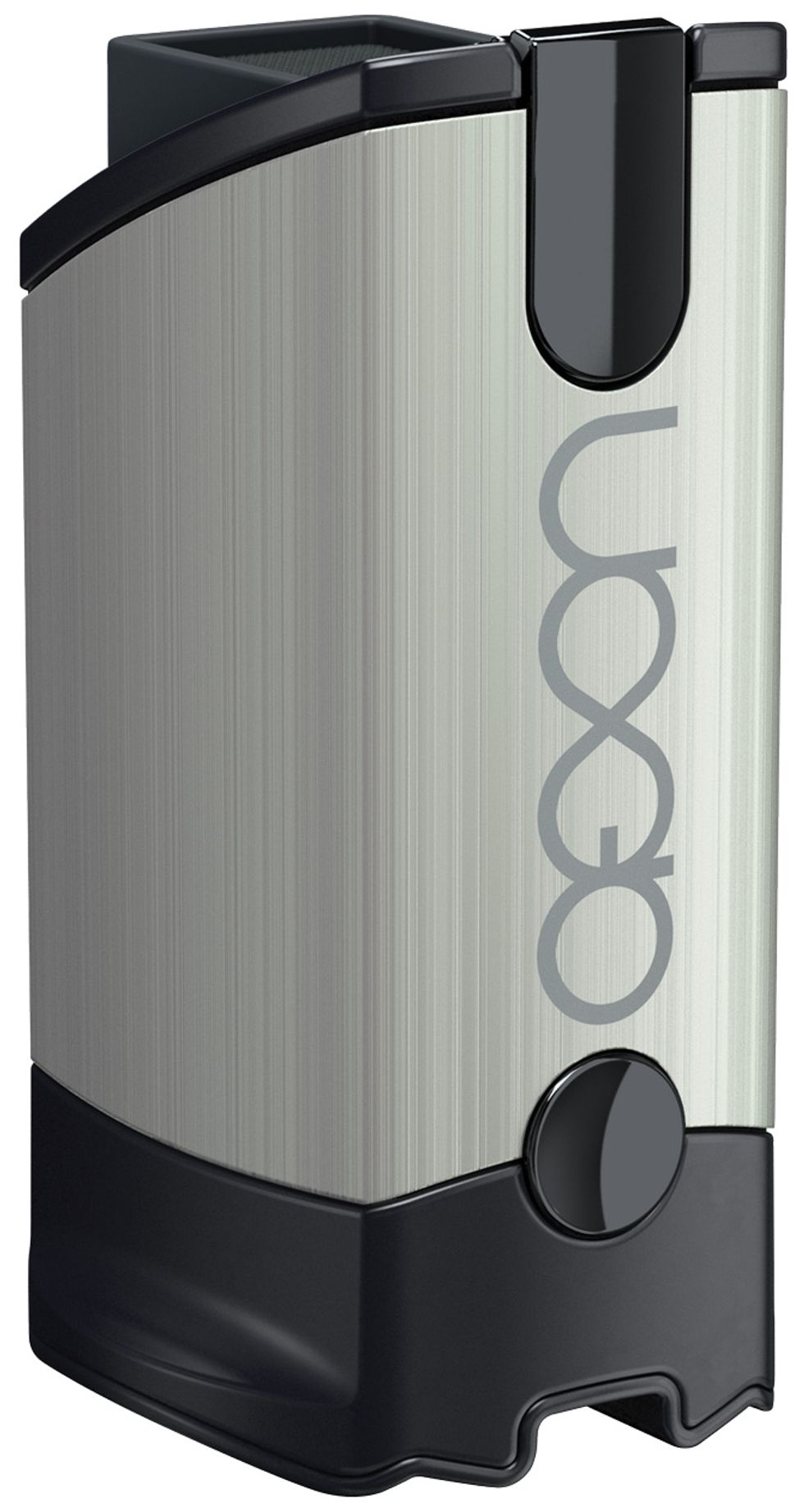
The EBow string sustainer is a great tool for lending mystery to a song and extracting yourself form a same-old-solo rut. TC Electronic’s AEON is the first real hand-held rival to the EBow. And its relatively accessible price makes it a cool option for casual users on the fence about an effect they’ll use sparingly.

Like the EBow, the AEON uses an 9V battery-driven electromagnetic field to vibrate a guitar string. It’s intuitive and easy to use, though a few techniques are critical to making it work and sound best. Two contoured channels serve as string guides to assure that the string stays in the center of the electromagnetic field. Situating the AEON at the vibrational sweet spot along a string’s length is also critical, though shifting that placement generates expressive variations in intensity. AEON is a cool study in design economy. There’s a clip to hold the battery rather than a compartment and a single push button activates the effect. But while the brushed aluminum enclosure prevents slippage in sweaty hands, a few simple ergonomic improvements like thumb and finger divots could make it more comfortable. Those minor gripes aside, AEON is a blast, and an easy way to expand your guitar’s expressive potential.

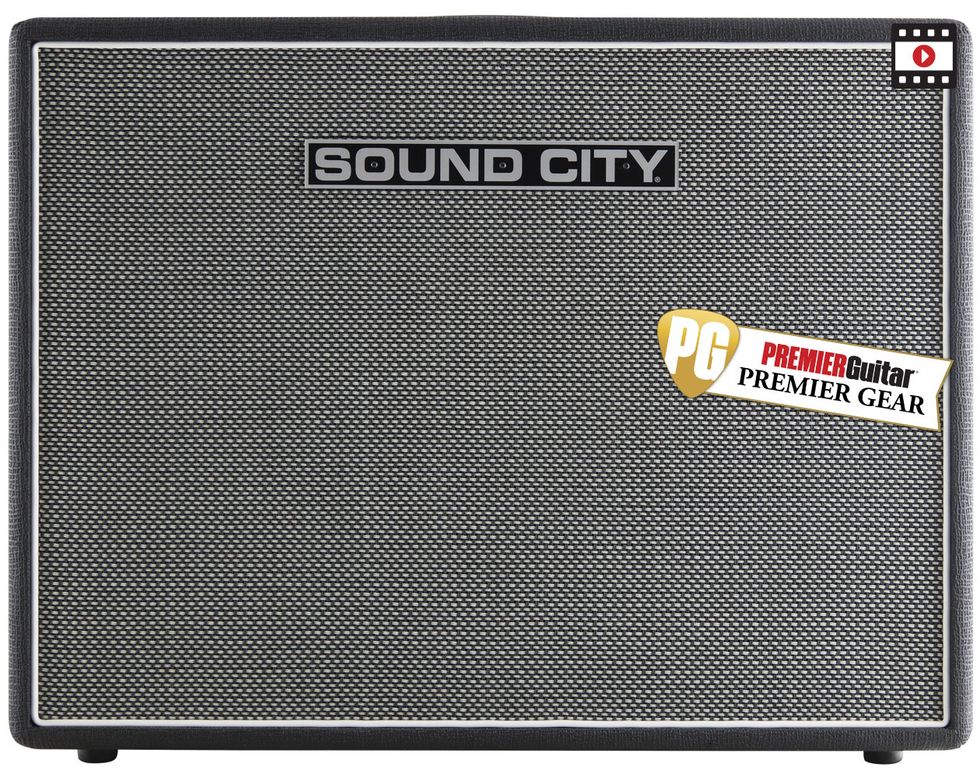
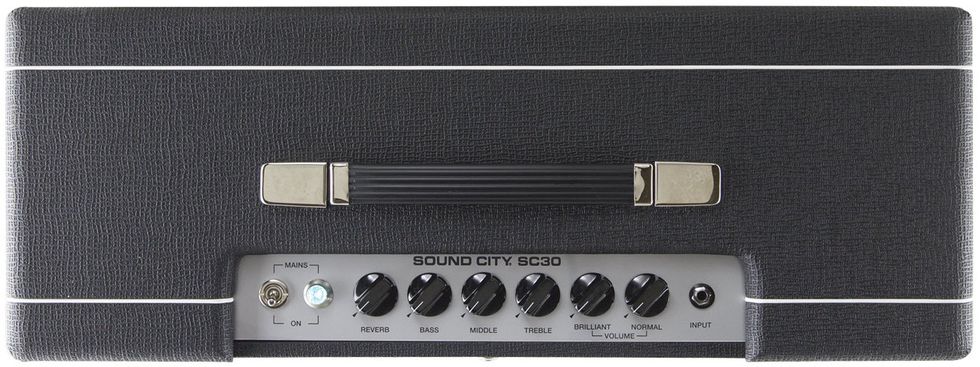
Sound City SC30 Review


When I was starting out on guitar a few too many decades ago, I’d sometimes spot used Sound City amps in guitar shops—and run the other way. It was solid-state crap—just the sort of stuff a shifty salesperson would try to unload on an ignorant kid.

And I was an ignorant kid. I had no idea that Sound City had made cool amps in the 1960s. Those original amps were created for and named after Ivor Arbiter’s London music shop. Playing catch-up with fellow retailer Jim Marshall and his bold new amps, Arbiter hired Dave Reeves to design competitive models. But not long after, Reeves moved on to create the historic Hiwatt brand, while Sound City amps slid into mediocrity.

Second Sound City
Last year Steve Fryette and Neal Ostberg of Fryette Amplification acquired the Sound City name. The 30-watt 1×12 SC30 combo is their latest effort. It’s not based on a particular vintage model, but it definitely provides a mid-1960s playing experience, with an emphasis on power tube distortion. The SC30 doesn’t sound quite like an old Marshall JTM45, but anyone who digs “Bluesbreaker”-style amps should feel right at home here.

The ’60s amps that inspire the new Sound City line have separate bright and normal channels. Here, though, there’s a single input, with separate controls for the internally jumpered channels. There are bass, mid, and treble controls, plus a wet/dry knob for the amp’s juicy spring reverb. That’s it—pretty darn simple.

Nonetheless, the SC30 provides a phenomenal range of tones. Its clean colors balance formidable low-end girth and airy sparkle. They’re hyper-articulate, transmitting every dynamic variation, every brush of fingernail or scrape of pick. Nuanced players will love these nuanced sounds.

Nuanced players will love these nuanced sounds.

Tones get crunchy when you raise the two volume controls toward their midpoints. You can summon many shades of distortion by adjusting the relative brilliant/normal levels. At high volume, tones are massive, with glorious power-amp saturation and seemingly eternal sustain. Yet even with the volume knobs cranked, tones retain powerful upper-mid presence and snappy response. These sounds aren’t tight in the modern hard-rock/metal sense, but they get closer to that sensibility than many ’60s-style combos.

Roar, Not Buzz
The lack of a master volume control is a double-edged sword. It means you’re working with rich power-tube distortion, not buzzy preamp gain. But it can be hard to access low-volume crunch without adding a power attenuator or load box. The SC30 is loud for a 30-watt amp, and it sounds so good when it’s working hard that you’ll probably want to let it. This is a hot amp in every sense—you can feel the heat coming off the chassis. (The power tubes are cathode bias, which results in higher operating temperature).

The tone controls feel … curated, for lack of a better word. Their ranges aren’t vast, but their usefulness is. High bass settings provide extraordinary wallop for an open-back combo. High treble settings are bright but not sadistically shrill. With both gain and treble cranked, you get vicious, glassy crunch that maintains its musicality. The SC30 excels at the brutal-in-a-cool-way sizzle you get from, say, overdriven Tele bridge pickups. (I give the tone controls a workout starting at 06:55 in the demo clip. I play a series of similar riffs on a single humbucker bridge pickup, changing nothing but the tone knob settings.) In short, SC30 merits that highest of amp accolades: “It’s impossible to dial in a bad sound.”

Valve Job
Some of the SC30’s character stems from its dual KT66 power tubes. (You can substitute 6L6s or 5881s without re-biasing, though I didn’t test these options.) Compared to, say, the EL34 tubes found in many Marshall amps, KT66s are slower to distort. Their highs have more chime, and their lows have more punchy definition. It’s a hi-fi sound relative to, say, the grinding, midrange-forward character of plexi-era Marshalls.

The SC30’s relatively high headroom and wide frequency range should please players who tend to sculpt tones from their pedalboards. But it’s not as if you need stompboxes to make the most of this amp—especially given its remarkable dynamic response. You can veer from vicious to crystalline using only your guitar’s volume knob. I’d have no qualms about gigging with nothing more than a guitar, the SC30, and a cable. Well, maybe a beer.

The warm-toned, 3-spring Accutronics reverb tank isn’t too strongly flavored. There are no pesky resonant peaks. It does nice surfy/splashy sounds, while modest settings complement the amp’s assertive, ultra-present character.

Board Stiff
Peek inside the SC30’s chassis and you may be surprised by how … normal it looks. Small components are arrayed on one large circuit board plus three subsidiary boards. Heavy-duty standoffs secure these thick boards, and none of the amp’s potsor jacks are board-mounted. Circuit board construction keeps costs down, and Fryette reinvests where it matters most sonically: the custom speaker and transformers and the glorious-sounding Gold Lion power tubes.

The solid-wood cabinet feels reliable. The vinyl covering and grille fabric are handsome. The amp’s compact dimensions (approximately 24.5″ x 19″ x 9″) mean easy storage and transportation, but at 48 pounds, this may not be a great choice for the hernia prone.

The Verdict
The SC30 is a minimalist monster. The controls are simple. Bells and whistles are conspicuous in their absence. There’s no effects loop, no channel switching, no footswitch control—not even a standby switch. Nevertheless, you get a huge range of tactile tones distinguished by crisp presence, rich overtones, and superb dynamic response. The use of circuit board construction in this price range may disappoint some players, though I suspect any misgivings will evaporate about 10 seconds after plugging in. I adore this bold and versatile amp.

MXR 5150 Overdrive Machine

EVH5150Overdrive-11

MXR’s Eddie Van Halen signature phaser, flanger, and wah pedals made elements of Eddie’s tone available and affordable to the masses. But one of the most critical components in creating his “Brown Sound” is copious amp overdrive. If you don’t have a vintage Marshall Super Lead or an EVH amp (both expensive propositions), the right overdrive pedal is an effective shortcut. And the MOSFET-driven MXR 5150 Overdrive—which was designed by Bob Cedro with input from Mr. Van Halen himself—is a stab at harnessing Eddie’s hot-rodded, high-gain sounds in a pedal.

That’s no mean feat, given that EVH has traditionally been an amp overdrive dude. But the MXR often hits the mark through the use of a flexible set of EQ, drive, and gating controls—as well as a multi-gain-stage design that makes the pedal versatile beyond strictly Eddie-centric applications.

The extra clarity had me exploring sonorities and chord clusters that I ordinarily wouldn’t touch with this much gain.

Bigger Box, Bolder Sounds
The 5150 is reminiscent of MXR’s killer big box effects from the ’70s as well as the more recent MXR EVH-117 Flanger. It’s decked out in Eddie’s classic “racing stripe” livery. (Is it now possible to create an entire signal chain in this paint scheme? If there isn’t a cable yet someone should get on it!) The control panel features a common overdrive control set: output, bass, mid, treble, and gain. But there are also two smaller controls: a mini-button for ‘boost’ (which actually adds a little gain and compression,) and a small knob and a small knob for MXR’s Smart Gate noise gate that turns yellow when activated.

Diver Brown
I tested the 5150 Overdrive with a humbucker-equipped “Super Strat” as well as a traditional, single coil-equipped Stratocaster through the clean channel of a Mesa/Boogie Mark IV. At its lowest gain setting (around 6:30) and with all the tone controls at noon, the MXR turned the Boogie into something more like a cranked tweed Fender—not a stretch, given the Boogie’s design pedigree, but a beautiful, rich distortion sound. Chords took on an aggressive snarl that would excel in a hard rock or classic rock rhythm setting. To get less bite and cleaner tones you need a soft touch, but the fact that approach works is a testament to how dynamic the pedal can be. It’s also surprisingly sensitive: moving the gain up just a hair to around 7 o’clock means a distinct increase in saturation and sustain that’s cool for smoother, more polite lead sounds or heavy rhythm tones.

Move the gain knob to noon and you’re squarely in the distortion camp—verging on the realms of Eddie’s storied in-your-face “Brown Sound.” Here, it’s hard to resist boogie-inflected moves like the lead riff for “Beautiful Girls.” Low, open-string chugs feel punchy and articulate, and the individual notes of chords ring true and clear, which does wonders for big chords with a lot of low-end like Fmaj7#11 or inversions like D/F# and E/G#. The extra clarity found me exploring sonorities and chord clusters that I ordinarily wouldn’t touch with this much gain. For leads, this setting was wicked. Pinch harmonics popped with ease, and tremolo-picked, single-note melodies way up on the fretboard sounded triumphant.

Some of my favorite Van Halen moments occur when Eddie works the shades between clean and dirty sounds in a song, and the MXR is responsive in a way that makes these shades available with a slight shift in guitar volume. And I could move from a massive wall of sound to the familiar Van Halen, quiet, clean-ish rhythm (think of the interlude after the “House of Pain” solo, or the intro of “Drop Dead Legs”) with just a flick of the guitar volume control.

Maxing the gain generates massive sounds that could be mistaken for a raging stack of amps. For modern metal rhythms, the sound is tight and especially potent. Soloing also felt amazingly easy with this much gain, and with the noise gate keeping stray harmonics and noise under control, a lot of inconvenient mistakes became a lot less pronounced! That said, the superb definition and focus of the pedal rewarded precision. Alternate picked, scalar sequences popped with percussiveness like a typewriter in the hands of a transcription wiz. Most other pedals or ultra high-gain amps would turn into a nebulous blob of noise at this point. The 5150 Overdrive stayed exceptionally open and detailed.

The added compression and gain from the ‘boost’ function adds a slight but perceptible bump (+6 dB.) Predictably, it doesn’t feel quite like a boost in the most familiar sense. Instead it feels more like an additional texture—adding dimension and a little extra harmonic breadth to an already very happening sound.

Noise Police
When you use a lot of gain, you get a lot of noise. Usually, I’ll tame the noise (if it can be tamed) via muting techniques. With the 5150 Overdrive’s smart gate engaged, the pedal is so quiet that I sometimes forgot it was on. To really test the gate, I plugged in my Stratocaster, which can be unbearably noisy. It did wonders mitigating the Strat’s pesky hum, even with the gate set at near-minimum levels. The feature is a major plus. After using this pedal for a few weeks, it was almost hard to go back to a gate-less setup.

The Verdict
Eddie Van Halen’s playing has always been about inventiveness, and the 5150 takes a pretty inventive approach to the overdrive pedal template. While the 5150 name might imply that it’s strictly a “Brown-Sound-in-a-box” device, it’s far from one-dimensional. This little box can deliver virtually any overdrive/distortion sound with a vengeance.

The 5150 Overdrive’s near $200 price tag might be a little more than consumers are used to from MXR. But the fact that this pedal can decimate many boutique pedals that do much less makes it a killer buy.

Drybell Vibe Machine

Vibe_Machine_left_studio


The guys at DryBell in Croatia are nothing if not hardcore—their sole product so far, the V-1 Vibe Machine chorus/vibrato, took four years to develop. Like the original Shin-ei/Univox Uni-Vibe, it features four photocells, though the enclosure is smaller. Painstaking research identified common traits of stellar Uni-Vibe specimens and led to a proprietary matching technology that measures about two dozen photocell parameters. And an exclusive cell-sourcing partnership ensures every V-1 meets exacting specs.

The meticulous standards pay off, big time. The V-1 doesn’t just serve up delightfully warm and swirly chorus and subtle-to-disorienting vibrato with the granular dimensionality vintage snobs crave, it comes incredibly close to matching the supernatural magic of an old organ’s mechanical vibrato sound. And talk about extras: An expression-pedal input enables real-time control of speed, internal jumpers let you engage a Leslie-style ramp-up/ramp-down function and/or an output buffer, a bright/original switch caters to old-school and modern tone tastes, and three trim pots let you tweak output volume and the range and symmetry of the effect’s swell. A true home run.

Test gear: Eastwood Sidejack DLX Baritone w/Manlius Goatmaster pickups, db Instrument Amp 4E expression pedal, various pedals, Jaguar HC50 and Goodsell Valpreaux 21 combos

Providence Bass Boot Camp

Feb16_PG_REV_Quick-Hit_Providence-Bass-Boot-Comp_WEB-290

Compression isn’t the sexiest effect to talk about, but it’s a must-have (or should-have) for many a bassist. A good compressor will even out dynamics and bring life to tone for veteran players—not just lipstick a less-than-awesome right hand technique. Japan’s Providence has recently jumped into the bass compression game and loaned us their Bass Boot Comp for a look.

Visually similar to the company’s 3-knob Velvet Comp, the Bass Boot Comp is a 5-knob affair that brings controls for mix and threshold in addition to the level, sustain, and attack also found on the Velvet. The mix dial is especially nice since it gives a player the power to blend the compressed sound with the native signal. This provides a broader spectrum of tones and is a feature not always found on other compression pedals.

The Bass Boot Comp did what it’s supposed to do well. Rolling the attack almost all the way off, dialing the sustain to 10 o’clock, and the threshold to 2 o’clock, the pedal worked as a limiter—ideal for slappers and heavy picking. I got to a smoothly compressed and even fingerstyle tone by cranking the sustain, inching the threshold to 3 o’clock, and moving the attack to 11 o’clock. Speaking of sustain, it’ll do so for days with the dial in the upper region.

Providence pedals tend to fall on the pricey side of the spectrum, but what you get in return here is a solid compressor that brings a bit more control to the table than some others in its class.


Fender Acoustic SFX

IMG_0020_WEB

It’s easy to overlook the virtues of a good acoustic amplifier. Having one isn’t essential to enjoying your guitar at home or around a campfire. And any performance space with a microphone (or two, if you sing) and a PA will probably get your performance over to the crowd.

But if you’ve ever experienced the indignities of playing through a junk PA, you know that a little extra control over your performance situation is a very nice thing. And if you’re not willing to incur the inconvenience and expense of your own PA and DI, an acoustic amp is a good way to go.

Fender’s Acoustic SFX is a very good acoustic amp—rich sounding with a functional stereo speaker array and a selection of effects that make it sound downright expansive at times. But it also manages the neat trick of being a sort of all-in-one acoustic performance “mothership” without being bogged down by bells, whistles, and sound optimization tools that are tricky to use on the fly.

I was equally—if not more—impressed with how high levels of the second speaker added headroom and flexibility to the EQ controls.

Sonic Redistribution
The Acoustic SFX is not Fender’s first acoustic amp to feature the SFX (stereo field expansion) technology. Two previous iterations of the Acoustasonic line featured the stereo sound distribution technique devised by Aspen Pittman and Drew Daniels. In brief, the SFX system is based on a forward-facing speaker and a second, smaller speaker that’s situated below and at 90 degrees from the forward-facing driver. The front-facing speaker receives and broadcasts the sum of left and right signals. The second, smaller speaker receives a left-minus-right signal. While the speakers are technically rendered out of phase, what you hear is not thin phase cancellation but a wider signal that’s divided into component parts and redistributed in a wave of sound that arrives at the ear as a more detailed sonic picture.

Fender incorporated the SFX speaker array into the cabinet design beautifully—creating small portholes on either side of the amp and a rectangular port on the rear. Thoughtful design abounds elsewhere. The entire topside of the amp just forward of the control panel is a very confortable, contoured handle. The cavity between the handle and the control panel functions as a cool little stash box where you can put slides, picks, or whatever device you might be using for backing tracks or between-set tunes. The curved 9-ply wood cabinet, meanwhile, looks like it was lifted from an Eames chair.

The control set is a straightforward affair that’s pretty easy to navigate. There’s a single volume knob, a three-band EQ, and reverb and effects-level controls for each of the amplifier’s channels. Each channel has a phase button if you run into trouble with feedback. The third, middle set of controls is for the amp’s effects and the SFX functionality, which, as we’ll see, enhances the sound of the amp in profound ways. The effects set includes a simple one-repeat delay, a multi-repeat delay, chorus, and vibrato. Each is tap-tempo enabled and can be bypassed via an optional footswitch or by turning the effects knob to zero.

The SFX knob is essentially a level/balance control that determines how much sound is distributed to the side-mounted speaker. But its character shifts considerably depending on how you set the effects and at what level.

The back panel has a pretty standard set of acoustic amp I/Os (balanced XLR out, combination XLR/1/4″ mic/line inputs), a voltage selector, and a footswitch jack for remotely bypassing the effects.

Street: 

$899

Fender Acoustic SFX
fender.com

Acoustic Architecture in Practice
In it’s most straightforward setup and at the lowest possible SFX settings, the Acoustic SFX is a great blank slate for most acoustics. I used a mahogany Martin 00-15 and Gibson J-45 with L.R. Baggs Element pickups. And while the amp seemed to favor the Gibson’s balance of low end and patina’d highs to the Martin’s more compact, sparklier personality, the EQ controls provided ample headroom to dial up very pretty approximations of each guitar’s voice.

Dialing in the SFX function pays big dividends, though, and I often wondered why one would ever opt to dial out the function entirely. While Fender makes much of the way the SFX design works with the reverb and effects to add extra dimension, I was equally—if not more—impressed with how high levels of the second speaker added headroom and flexibility to the EQ controls, which are typically the hardest thing to dial in right on an acoustic amp.

At high stereo SFX settings, the amp’s intrinsic high-end sensitivity was more apparent, but so was an extra bit of presence and air that made the high end of both guitars sound less boxy. Dialing in a high/mid setting that eliminated crispy, clacky picking artifacts without totally diminishing the sparkling overtones was relatively effortless. And bass sounds took on a warmer, more atmospheric edge that enabled me to reduce the already ample bass response. If you move between performance spaces of varying size, the added headroom and dimension the SFX function adds to the EQ controls can be invaluable. And if you use a lot of low-tuned alternate tunings, that extra dimension and enhanced frequency balance can enliven overtones in beautiful ways.

The effects, while not spectacularly rich, deep, or colorful, work well with the amp’s basic voice. The reverb, in particular, is quite nice at mellower settings. I especially enjoyed mixing it in with a little of the multi-repeat delay for atmospheric chord arpeggios. If you like things especially spacy, the Acoustic SFX effects will go there, although they sound less warm at higher levels.

The Verdict
There’s much to like about the Acoustic SFX. It’s stylish, functional, and delivers ease-of-use and true sound-sculpting potential at a price that’s still well south of many other professional grade acoustic amps. There’s room for improvement here and there: The high midrange could be a little softer and more contoured, for instance. But the ample headroom and cool SFX-derived sounds make this amp a very solid and reliable gigging partner.

Ernie Ball Music Man – St. Vincent

Aug15_LNU_EBMM_STV_WEB

It’s no secret that many “artist signature” guitars aren’t all that different from a company’s stock models. Jigger with surface cosmetics, maybe tweak the electronics a bit, and voilà — you’ve got a “new” model to sell at an upmarket price.

Music Man’s St. Vincent is nothing like that. Designed top to bottom by Annie “St. Vincent” Clark with help from the Ernie Ball/Music Man lutherie team, the instrument is as bold, imaginative, and thoughtful as Clark’s extraordinary guitar work.

Old-School Modern
The St. Vincent’s angular, geometric body is unapologetically Modernistic—and that’s upper-case “Modernistic” in the mid-20th-century-design sense. Guitar history geeks will probably flash on 1957/1958, when Gibson created the Flying V, Explorer, and Moderne. Designed by visionary Gibson honcho Ted McCarty, these instruments (along with 1963’s Ray Dietrich-designed Firebird) aimed to update Gibson’s then-stodgy image with a bit of Fender’s space-age panache.

It’s easy to imagine the St. Vincent’s angular body in the McCarty sketchbook alongside the abstractly geometric V and Explorer. But the St. Vincent’s ergonomics are superior to those midcentury classics. Unlike the V, for example, Clark’s guitar is as comfortable to play seated as standing. The African mahogany body balances beautifully. There’s no conventional cutaway, but you have clearance up to the 19th fret, where you can position your index finger for easy access the top three frets. The upper and lower bouts are beveled slightly in relation to the guitar’s centerline, providing a Strat-like armrest and creating the illusion of a multicolored top in some lighting conditions. Clark even hand-mixed the steely-blue finish color. (The guitar is also available in black.)

The St. Vincent weighs a mere 7 pounds, thanks to its svelte, slim-waisted body. It’s a great choice for players of smaller stature, or anyone whose back or shoulders object to overweight axes.

Slight but Solid
The St. Vincent weighs a mere 7 pounds, thanks to its svelte, slim-waisted body shape. It’s a great choice for players of smaller stature, or anyone whose back or shoulders object to overweight axes. But despite its modest weight and slender proportions, nothing about the St. Vincent feels insubstantial.

The stout rosewood neck has a 10″ radius and a relaxed D shape. Its back is only lightly oiled, providing a raw-wood feel and a solid grip. The 25.5″-scale fretboard has 22 immaculately installed and rounded frets. The fulcrum-tremolo bridge is geared for quick, Van Halen-esque deep dives, but it’s also capable of subtle vibrato under an ultra-light touch. Pitch stability is about as good as it gets on guitars without locking trems. (The locking Schaller tuners help, as does the expertly installed and intonation-compensated nut.) Build quality is excellent across the board.

There are many cool cosmetic details, including the vertically oriented pickguard, triangular knobs, and interlocking-circle position markers. The only visual misstep for me is the standard Music Man headstock. I dig its compact yet elegant shape and offbeat 4+2 tuner layout, but to my eye, at least, its relaxed curves and pearloid tuner buttons don’t quite harmonize with the body’s clean angles and stark white plastic hardware. Having said that, the dark shade of the neck and headstock makes these elements recede into the background. Your eyes can’t help but focus on the bold blue body.


Street:
$1,899

Ernie Ball/Music Man St. Vincent
music-man.com

Wicked Wiring
The guitar’s electronics are as unconventional as its angles. Clark opted for three mini-humbuckers—shades of Gibson’s Firebird VII. There’s a 5-way selector switch, but the pickups aren’t wired Strat-style. Positions 1, 2, and 3 solo each of the pickups. Position 4 combines all three pickups in parallel, while position 5 blends the outer two. You can’t get the sound of two combined adjacent pickups, as from Strat positions 2 and 4, but that’s cool—the all-three setting provides crisp, articulate “out-of-phase” sounds, and the neck and bridge harmonize gloriously.

I confess I’ve never owned a mini-humbucker guitar. These DiMarzios sound terrific, but it took me an hour or two of playing to get the hang of them. They have a snappy, focused attack compared to conventional humbuckers, and a more hair-trigger tonal response. They can seem dark at times, yet highs can erupt violently when you dig in. Once you get acclimated, though, they can be extraordinarily dynamic. Just be aware that they respond differently than most humbuckers or single-coils. Nor do they behave like P-90s, though, like P-90s, their clean tones tend to be rough-edged and “furry” relative to single-coils, while distorted tones usually have more snap and string-to-string differentiation than on humbucker guitars.

The St. Vincent doesn’t lack low end power, but macho chunk isn’t its strong suit. Heavily overdriven tones tend to evoke early Zep or AC/DC, with crisp attack and strong note definition. Nor is the guitar terribly twangy—clean tones maintain bulk, and you never get anything quite like, say, a soloed bridge pickup on a Strat or Tele. But these aren’t complaints. I dig the St. Vincent’s unique voice and the way it adds new colors to your palette. And whether you play clean, dirty, or in-between, you’ll appreciate the excellent intonation and rich, ringing sustain.

The Verdict
Annie Clark’s signature model is visually striking. But its distinctiveness is more than skin-deep. Its superb ergonomics are perfect for players seeking a big-guitar sound from a light, lean-bodied instrument. The build quality is excellent. Three mini-humbuckers and unconventional wiring provide many distinctive tones, all of which benefit from the guitar’s fine intonation and great natural sustain. The price may seem steep for a solidbody with a bolt-on neck, but this is a unique new design, and the detail work and setup are fantastic. (Some skilled technician invested substantial bench time fine-tuning this instrument.) The St. Vincent is as cool, clever, and engaging as, well, a new St. Vincent album.

RJM Mastermind PBC


pbc-image_front

RJM Music Technology is best known for rack switching devices, and players from Beck to Billie Joe Armstrong to John Petrucci all use the company’s high-end systems. The new, U.S.A.-built Mastermind PBC, however, shrinks RJM’s rack mount technology into a compact format designed to fit on a pedalboard and be more accessibly priced to players without Learjet budgets.

The Mastermind PBC is ostensibly a control station for your pedals, but it can do much more than that—certainly more than we can cover in this review. The unit features 10 loops with insert points in between groups, which offers copious routing options. You can even run some pedals straight into the amp and others through your amp’s effects loop.

Ratings

Pros:
Excellent, versatile design. USB editing option greatly increases functionality.

Cons:
A little pricey. Editor has a moderate learning curve.

Tones:

Ease of Use:

Build/Design:

Value:

Street:
$999

RJM Music Mastermind PBC
rjmmusic.com

RJM clearly considered just about every scenario pedal junkies are likely to face. So the Mastermind PBC offers simple solutions for the most common problems. While the unit is true bypass, there are three switchable buffers that can be saved as part of any given preset. The last four loops, meanwhile, have an internal mixer so you can route pedals in series or parallel. The Mastermind PBC can also be configured for a stereo setup or for A/B routing to different amps. I took advantage of the latter option and connected one end to my shimmery clean blackface Fender Deluxe Reverb and the other to my Mesa/Boogie Trem-O-Verb. It was a pairing made in heaven.

There is room to store up to 768 presets so it’s very unlikely you’ll run out of space. The readout is sizeable but not too huge—the right balance of compact and easy on the eyes. There’s even a built-in tuner (although there’s no dedicated tuner out on the back panel). Other standout features are USB connectivity, a flash storage option, and PBC Editor (for use on a Mac or PC). One of my biggest gripes with anything multi-effects related is scrolling through screens to adjust every little parameter. The PBC Editor gives you much more control over the Mastermind’s internal control parameters.

Though downloading and hooking up the editor is easy, it’s not immediately intuitive. It took a little bit of time to get my bearings, and I think many guitarists coming from a world of analog pedals will have the same experience. Successfully navigating the editor comes with a significant payoff, however. The level of control is astounding, especially if you use MIDI capable pedals like the Strymon TimeLine or Mobius, or the Line 6 M series. The sound sculpting potential opened up by the editor and the seamless way it will interface with MIDI pedals is enormous.

At $999 street, the Mastermind PBC is the priciest switcher in our roundup, but there’s little sticker shock when you realize how much it can do and the exponential way in which it expands the possibilities of your rig. It’s perfectly suited for a professional touring musician. But the sound shaping possibilities and the excellent MIDI and digital workstation interfacing options could just as easily make it the centerpiece of a home recording rig.